Installs we handle
| Project | What is involved | Planning tip |
|---|---|---|
| Bathroom addition. | Supply, drain and vent, shower or tub, toilet and sink. | Check the nearest drain stack and vent path first. |
| Kitchen remodel. | Sink, faucet, dishwasher, disposal, ice maker line. | Move the sink last since the drain location sets the layout. |
| Laundry hookup. | Supply valves, standpipe or box, drain. | Include a pan and floor drain if above living space. |
| Outdoor hose bib. | Frost-free spigot and shutoff. | Install an interior shutoff for winter. |
| Water softener or filter. | Bypass valves, drain, electrical outlet. | Test hardness first. |
From idea to inspection
Walkthrough.
We look at the location, the nearest supply and drain and any obstacles.
Scope.
You receive a written scope, fixture list and price.
Rough-in.
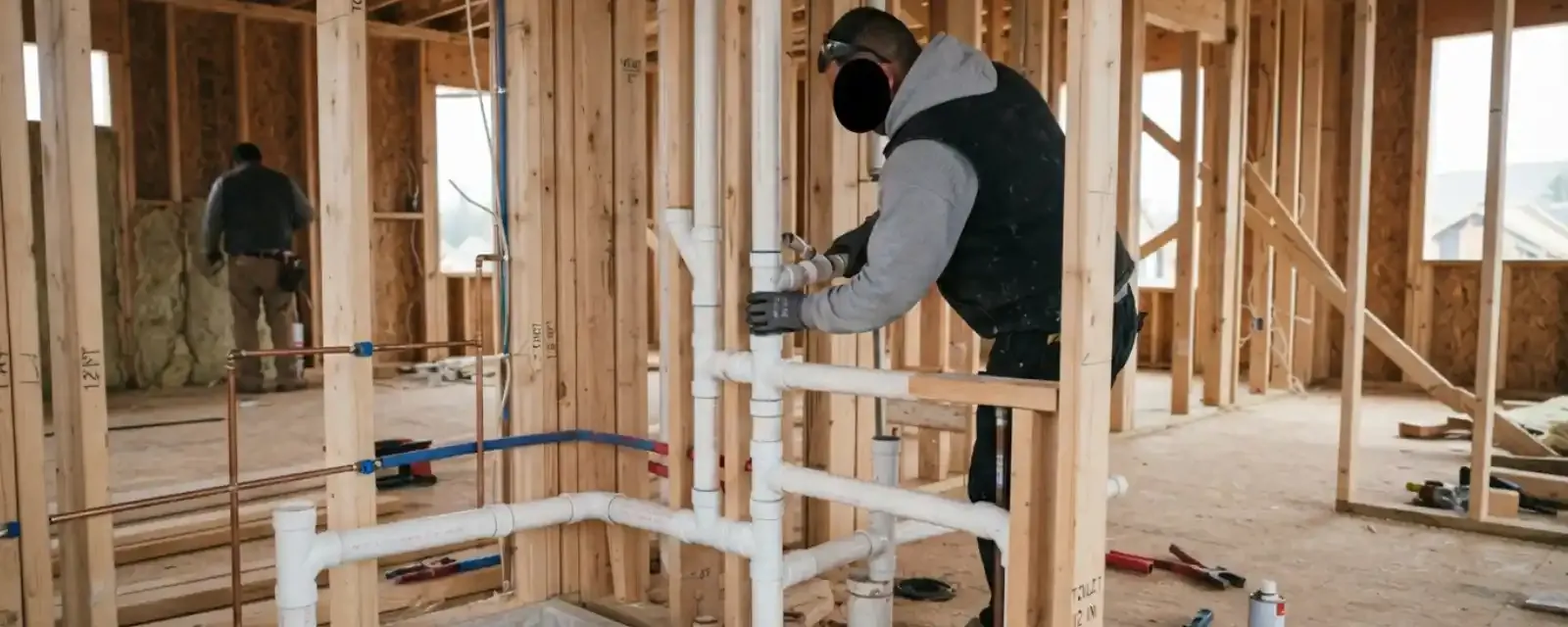
We run supply, drain and vent before walls are closed, then call for inspection.
Finish.
We set fixtures, test every connection and clean up.
Starting a project?
Call (301) 936-0389 to schedule a walkthrough.
Rough-in plumbing and the drain, waste and vent system
Every fixture needs a drain, a trap and a vent. The vent lets air into the drain system so water flows freely and traps do not siphon dry. Skipping or undersizing a vent is the most common reason a new bathroom gurgles.
The drain slope matters too. A drain pipe needs a steady downward pitch so waste moves without leaving solids behind. In a slab home, adding a bathroom may require cutting concrete to reach the drain. We check the slab and the sewer connection before we promise a location.
Permits, inspections and licensing
In Prince George's County, WSSC Water issues plumbing permits and requires that most plumbing be done by a WSSC Water-licensed plumber or gasfitter. After rough-in and again at completion, an inspector confirms the work meets code.
The City of Greenbelt says that projects requiring a county building permit must also be permitted by the City. A bathroom addition usually involves both, so we coordinate our plumbing permit with the building permit your project needs.
Cooperatives and condominium associations often add their own approval step. If you live in one, get written approval before we start. This avoids costly rework.
Older homes: what to expect behind the wall
In an older house, walls and floors can hide surprises such as older pipe materials and shutoffs that no longer close. We inspect the connection points before quoting so you know the true scope.
If the existing supply is corroded, adding a fixture to it will not help. We may recommend a section of new pipe or, in extreme cases, a full repiping.
Planning around the fixtures you choose
Fixture choice drives the plumbing. A freestanding tub needs a floor-mounted filler or a wall valve at a specific distance. A rain shower head wants more flow than a standard valve can supply. A tankless heater changes the gas line. Decide fixtures before rough-in so the plumbing matches.
Bring spec sheets to the walkthrough. Rough-in dimensions for toilets, vanities and valves differ by model, and setting a drain two inches off can mean cutting a finished floor. We check the dimensions against the paperwork before we close the walls.
Plan access for the future. A shutoff behind a tiled wall is useless when a valve fails. We recommend an access panel for every concealed valve.
Codes and product standards for new work
New plumbing is built to the plumbing and fuel gas code WSSC Water enforces, and inspectors check rough-in before walls are closed. Fixtures should carry standard markings such as ASME A112.19.2 for toilets and ASME A112.18.1 for faucets.
Water supply components that touch drinking water should be NSF/ANSI 61 listed. Keep the permit and the inspection record, since both help when you sell the house.
What shapes the cost of an installation
A fixed price for the work is quoted after the walkthrough.
Want your real number? New installations are not insured events, but a licensed installation makes later claims simpler. Call (301) 936-0389 and we will explain the price before work starts.
Frequently asked questions
Yes. We install customer-supplied fixtures, though we cannot warranty the product itself.
Often yes. WSSC Water issues plumbing permits in this district and we apply for them when the work requires it.
Usually, if there is a way to get the waste to the sewer. Below-grade bathrooms may need a sewage ejector pump. We check the drain depth on the walkthrough.
Same-day appointments are possible when available for small jobs. Larger installs are scheduled after the walkthrough.
Yes. We install supply valves, drain connections and braided lines.
Yes. We work with general contractors and inspectors so rough-in is done before walls are closed.