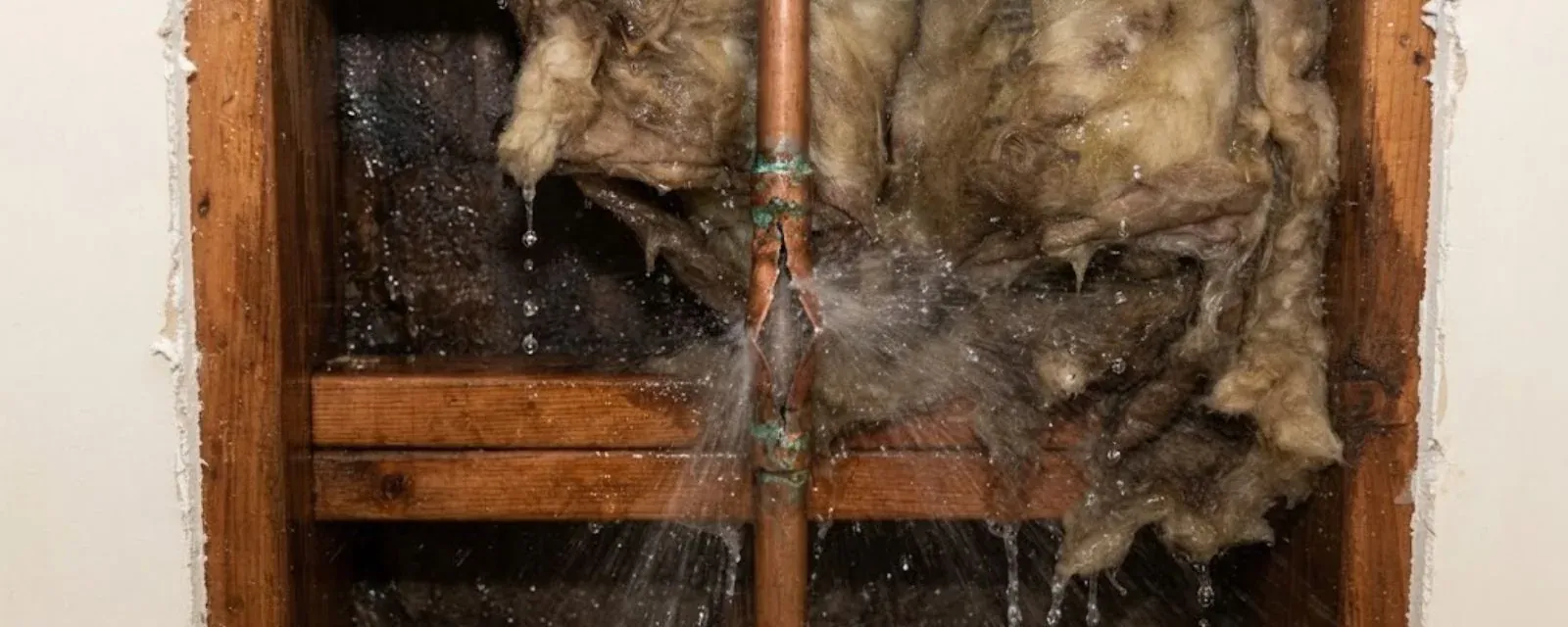
Burst pipe: act in this order
Do these steps in order and do not wait to make the call.
- Close the main water shutoff, usually where the line enters the house or near the meter.
- Turn off the water heater, then open a low faucet to drain remaining water.
- If water is near outlets or the panel, shut off power at the breaker only if you can reach it safely, otherwise leave.
- Move valuables, photograph the damage and call our 24/7 line.
Water near electrical equipment is dangerous. If you cannot reach the panel safely, stay out and call an electrician or the fire department. If you smell gas, leave and call your gas utility or 911.
Why pipes burst
| Cause | Where it happens | Prevention |
|---|---|---|
| Freezing. | Exterior walls, attics, crawl spaces, hose bibs. | Insulate, keep heat on, open cabinet doors in a cold snap. |
| Corrosion. | Old galvanized and some copper lines. | Replace aging pipe, see repiping. |
| High pressure. | Homes without a regulator. | Install a pressure regulator and expansion tank. |
| Shifting ground. | Lines under slabs or yards. | Monitor and replace weak sections. |
| Impact. | Renovation or digging. | Mark lines before work. |
Pipe burst right now?
Close the main and call (301) 936-0389. We answer 24/7.
Frozen pipes in Prince George's County
Winter cold snaps hit this area hard enough to freeze exposed pipes in exterior walls, unheated crawl spaces and attics. A frozen pipe may not burst until it thaws, when the weakened wall gives way and water floods out.
If you find a frozen pipe with no leak, keep the faucet slightly open, warm the area with a hair dryer or space heater at a safe distance and call us. Never use an open flame. We thaw pipes safely and inspect them for cracks before you turn the water back on.
After the water stops: drying and documenting
Take photographs and video of everything affected before you move it, and keep damaged items until your insurer has seen them. Call your insurance company promptly and ask what mitigation work they expect.
Drying matters because mold can begin within days in wet drywall and insulation. A professional water mitigation company can remove wet material and run dehumidifiers. We repair the pipe and coordinate with them, so the walls are not closed until they are dry.
Greenbelt's older block and brick homes can trap moisture inside walls. Dry them thoroughly before patching.
Permits and repair standards
Emergency repairs may still need a permit afterward. WSSC Water licenses plumbers in this district and requires permits for many repairs, and we handle that for the work we do. Ask for our license number and verify it with WSSC if you wish.
What a repair visit looks like
On arrival we confirm that the main is closed and the water heater is off. We check for electrical hazards and limit further flooding. Then we find the break, which may be in an open run or hidden behind drywall.
Where the pipe is exposed, we cut out the damaged section and join new pipe with proper fittings. Where it is hidden, we open the smallest section of wall that reaches it. We pressure test before closing anything so the repair is proven.
We note the pipe material and condition on the invoice. If the rest of the line is corroded, we explain that the next failure is likely and show you the options. See repiping if the system is near the end of its life.
Repair standards and pressure testing
A repaired section must be tested before it is covered, a requirement of the plumbing code WSSC enforces. New copper tubing is made to ASTM B88 and PEX to ASTM F876, and fittings must be rated for the pipe they join.
WSSC's guidance for customers is to know where the main shutoff is and to check that it works. That guideline is the simplest protection a house can have against a burst.
What shapes the cost of a burst pipe repair
We quote the repair after the water is stopped.
Want your real number? Sudden burst pipe damage is commonly covered by homeowners policies, though the cost of the pipe repair itself may not be. Call your insurer early. Call (301) 936-0389 and we will explain the price before work starts.
Frequently asked questions
Yes. The line is answered 24/7. Close the main and call.
It is usually near the water meter or where the service line enters the house, often in a basement, crawl space or utility closet. Find it now and test it.
Only if you can reach the panel without standing in water. Otherwise leave and call for help.
Sudden damage is often covered, but gradual leaks are not. Photograph everything and call your insurer.
Insulate exposed pipes, keep the heat on, seal drafts and open cabinet doors on very cold nights. Disconnect hoses from outdoor faucets before winter.
Yes, though it is a bigger job. We locate the break with leak detection and discuss rerouting versus opening the floor.