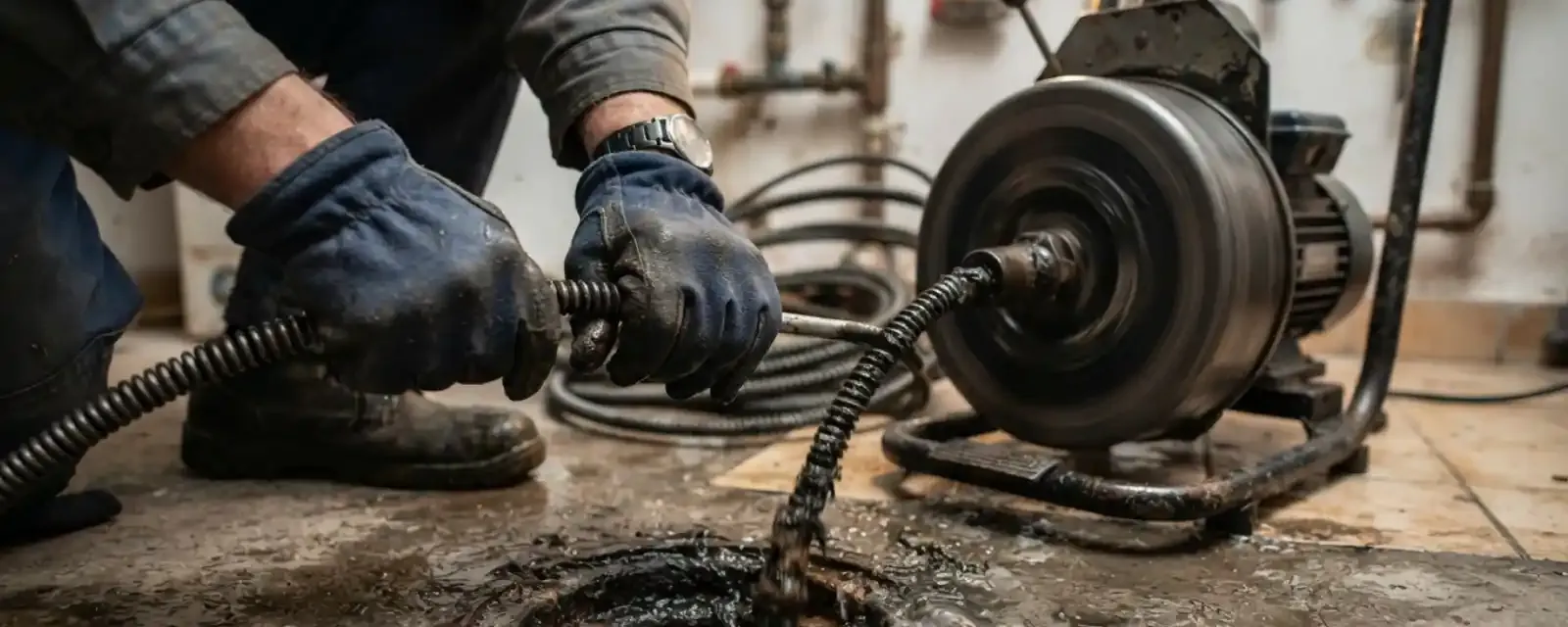
When a clogged drain is an emergency
Most slow drains can wait for the next appointment. A drain becomes an emergency when water has nowhere to go, and the signs are usually plain.
If wastewater is rising in a shower while the toilet flushes, or a basement floor drain is bubbling, the blockage is probably in the line that serves the whole house. That is the situation to call about at night or on a weekend.
- Several fixtures back up at once, such as a tub filling when the washer drains.
- Sewage smell with water or waste coming up through a floor drain.
- A toilet that will not flush and a sink that gurgles in the same bathroom.
- Water standing in a basement near the furnace or water heater.
Do not pour chemical drain openers into a standing blockage. They sit in the pipe, burn skin on contact and make the next plumber's job harder.
Where the clog really is
A single slow sink is a branch problem. Kitchen lines collect grease and food, bathroom lines collect hair and soap, and both are usually reachable from the fixture or a nearby cleanout with a hand auger or an electric cable machine.
When two or more fixtures slow down together, the blockage is further down, in the main drain that carries everything toward the sewer. That line runs under the floor or slab, so the cable has to enter through a cleanout, a pulled toilet or a roof vent.
We ask three questions on the phone: which fixtures are affected, whether the toilet is one of them, and whether water appears anywhere it should not. Those answers decide which tool goes on the truck.
How we clear a drain
Find the cleanout.
We locate the nearest access point so the cable travels the shortest path to the clog.
Cable or snake.
A cable with the right head cuts through grease, hair and soft roots without scarring the pipe.
Run water and test.
We flush every fixture on the line and watch the flow, not only the one that failed.
Camera if it returns.
If the same line has clogged before, a camera shows whether a belly, crack or root mass is the cause.
Which tool fits which clog
| Symptom | Likely cause | Usual tool |
|---|---|---|
| One sink drains slowly. | Hair, soap or grease in the branch. | Hand auger or small cable. |
| Kitchen sink backs up into the dishwasher. | Grease buildup downstream of the disposal. | Cable machine, then flush with hot water. |
| Tub and toilet back up together. | Blockage in the main drain. | Large cable through the cleanout. |
| Same line clogs every few months. | Roots, belly or scale inside the pipe. | Camera inspection, then hydro jetting. |
| Basement floor drain bubbles. | Main drain restriction or sewer backup. | Cleanout cable, then check the sewer line. |
This table is a starting guide. The actual cause is confirmed when the cable or camera reaches the blockage.
Water rising in a drain right now?
Call the 24/7 line. We can often arrange a same-day appointment, and the price is explained before work starts.
Greenbelt homes and the clogs they get
Old Greenbelt was built in 1937 and its original homes are concrete block and brick row houses grouped around shared courts. Greenbelt Homes, Inc. reports roughly 1,600 homes in the cooperative, and its own materials say it covers maintenance and repair of plumbing for members, so call the co-op first if you live in one of its homes. For a repeat clog in any home, a camera look shows the real cause instead of a third round of snaking.
If you live in a cooperative home, check with the cooperative's maintenance office before you book. Some repairs may fall to the co-op, and knowing that first can save a service call.
In the garden apartment communities, such as Springhill Lake, a clog that reaches several units is usually a building stack problem. Renters should report the problem to management first, and property managers can call to talk through stack and floor drain clearing.
What to do before we arrive
These steps keep a bad clog from becoming a flood.
- Stop using water in the house, including the washer, dishwasher and showers.
- Move rugs, cardboard and stored items away from floor drains and tub edges.
- Locate the cleanout cap, usually a round plug near the foundation or in the basement, and clear space around it.
- Note which fixtures are affected. That detail speeds up the diagnosis more than anything else.
- Keep children and pets away from standing water that may contain sewage.
Codes behind a clean drain line
Drain, waste and vent work in Prince George's County falls under the plumbing code WSSC Water enforces. That standard requires traps, vents and cleanouts in set places, which is why a clog that returns often has a venting or trap cause as well as a blockage.
WSSC's guidance for kitchen grease, which it calls Can the Grease, is the local standard for homeowners: pour grease into a can, cool it and put it in the trash. We follow the same guideline when we advise commercial kitchens.
What affects the price of drain cleaning
We quote the price before the cable goes in. These are the factors that move it.
Want your real number? Homeowners insurance usually covers sudden water damage but often excludes a backup unless you added sewer backup coverage, so check your policy before you assume. Call (301) 936-0389 and we will explain the price before work starts.
Hard water, grease and the clog that returns
WSSC Water, which supplies this part of Prince George's County, reported yearly average hardness of 65 mg/L from its Patuxent plant and 140 mg/L from its Potomac plant in its 2023 tap water report. Treated water from the Potomac side is on the harder end, and harder water leaves more mineral scale on pipe walls over the years. That scale narrows a drain and gives grease and hair something to catch on.
WSSC says the middle section of Prince George's County receives blended water, so ask WSSC which supply serves your street. If a line clogs again within months, scale or a bellied section is the likelier cause than bad luck.
Frequently asked questions
Yes. The emergency line is answered 24 hours a day, every day, including holidays. Tell the dispatcher which fixtures are backing up and whether sewage is involved, and we arrange the earliest appointment we can.
If only your house is affected, the blockage is likely on your side. WSSC Water maintains the main in the street, and its backups page says the property owner maintains the sewer service from the property line to the building. A WSSC representative or your registered plumber confirms who is responsible. See our sewer line repair page for what happens next.
A properly sized cable with the right head cuts the blockage and does not scrape clean pipe. Cracked or collapsed clay and cast iron lines are different. If the cable catches on something solid, we stop and use a camera instead of forcing it.
A dry trap is the common cause, and pouring a quart of water into the drain refills it. If the smell comes with gurgling or water rising, the main line may be restricted, and that is when to call.
We advise against it for standing water. The chemical sits against the pipe and can splash on whoever opens the trap. A cable or a plunger is safer and works better.
Yes. We work with tenants, landlords and property managers. If the clog is shared by several units, the manager should place the call so access to the stack and cleanout is arranged.