What goes into the price
| Item | What affects it | Typical surprise |
|---|---|---|
| The toilet. | Brand, bowl shape, flush system, height. | A tall comfort-height bowl needs a different rough-in check. |
| Labor. | Time on site, access, floor level. | Tight rooms take longer. |
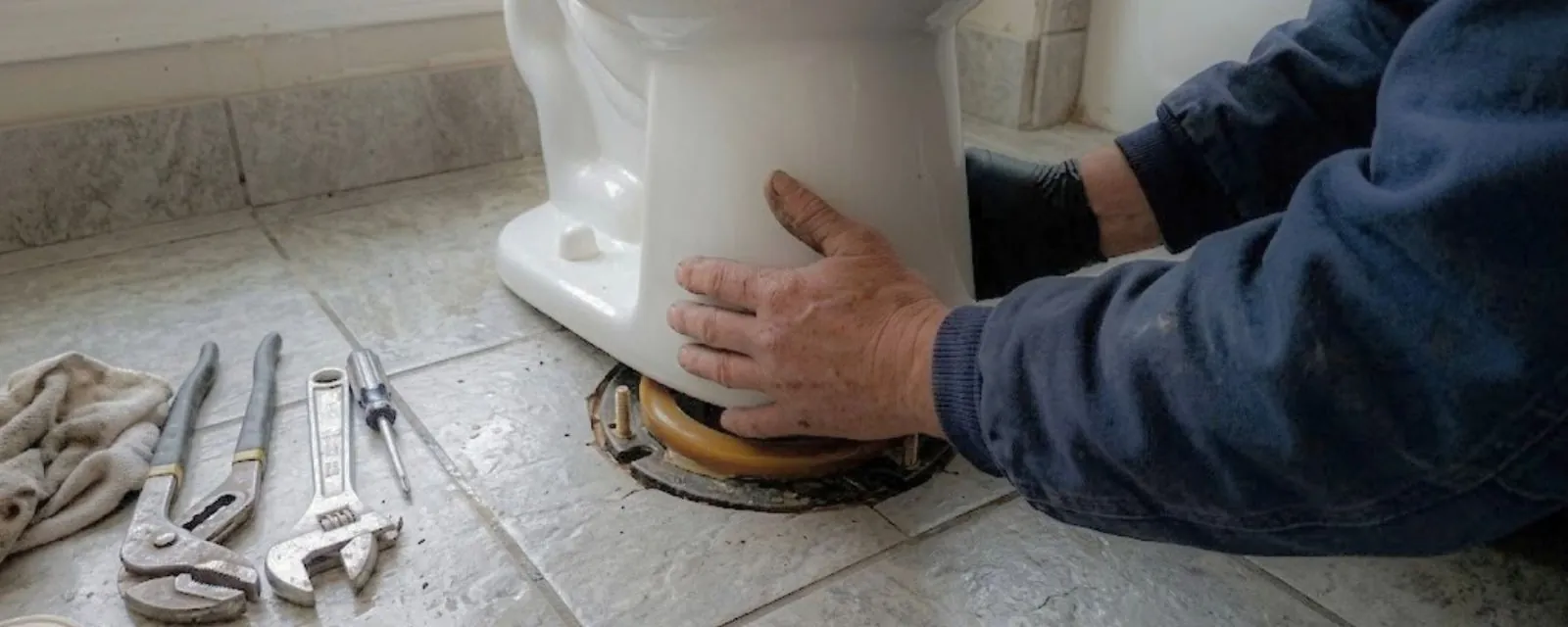
| Flange and wax ring. | Condition of the flange. | A corroded or broken flange needs a repair ring. |
| Shutoff valve and supply line. | Age and whether the valve works. | Seized valves cannot be closed during the swap. |
| Floor damage. | Rot from past leaks. | Soft subfloor needs repair first. |
| Removal and disposal. | Weight, stairs, access. | Heavy porcelain adds time. |
The rough-in measurement
The rough-in is the distance from the wall to the center of the drain. The most common is 12 inches, but 10 and 14 inch rough-ins exist in older houses. A toilet built for a different rough-in will not sit right, so measure before you buy.
Also check the bowl shape against the space. An elongated bowl is longer than a round one and needs more room in front. In small bathrooms in older homes, that can decide the model.
Want your real number?
Call (301) 936-0389. We give a clear price before we start.
Flange and floor: the part you cannot see
The flange is the ring the toilet bolts to. If it is cracked, rusted or too low, a new wax ring will not seal and the toilet will rock. A repair ring fixes many flanges for little money. If the floor around it is soft, it has to be repaired before the toilet goes back.
A toilet that was leaking for months may have damaged the subfloor and the ceiling below. We look at the area before pulling the old toilet so you hear about it before the work, not after.
How to get comparable quotes
- Ask each plumber whether the toilet is included or supplied by you.
- Ask whether the quote includes a new wax ring, bolts and supply line.
- Ask what happens if the flange or floor is damaged.
- Ask whether removal of the old toilet is included.
- Ask whether the shutoff valve will be replaced if it fails.
Water use, height and comfort features that change the price
Toilet prices vary with flush technology, bowl height and finish. A comfort-height bowl sits a couple of inches higher than a standard bowl, which many people prefer. A toilet with a pressure-assisted flush is louder and more powerful. A dual-flush toilet offers two flush volumes.
A toilet rated WaterSense uses less water per flush. Look for the label on the box. Lower water use matters in a house with an old drain line, because a toilet that flushes weakly can cause more clogs.
Why a cheaper toilet can cost more
A very cheap toilet may have a weak flush, thin parts and a fill valve that fails early. If you need to replace it again in five years, you have paid twice. A mid-range toilet with a good flush and available parts is often the better buy.
Ask us before you buy. We can tell you which models have given us trouble and which we prefer to install, and we can confirm the rough-in before you order.
What to do with the old toilet
A toilet weighs around fifty to a hundred pounds, and carrying it down stairs is not easy. We remove and carry it out. Some local waste programs take porcelain, so ask what applies to your address. Do not leave it at the curb unless the collector allows it.
Doing it yourself and when to stop
A confident homeowner can swap a toilet with a wrench, a new wax ring and a helper. The risks are cracking the porcelain when tightening, missing a flange problem, a leaking joint and a damaged floor. A toilet that rocks or leaks a week later is a sign that something was missed.
Stop and call if the floor is soft, the flange is broken, the shutoff valve will not close or you find rust or water stains below the toilet. Those need repair before a new toilet goes in.
Choosing between a one-piece and a two-piece toilet
A one-piece toilet has a smooth profile that is easy to clean, but it is heavier and more expensive. A two-piece toilet is lighter to carry and easier to replace if the tank cracks. Both flush well when chosen carefully.
In small bathrooms, check the depth and the clearance from the wall. A compact elongated bowl gives comfort without taking more room. Bring the room dimensions when you shop, and tell us the model so we can confirm the rough-in.
Scheduling and what to expect on the day
A toilet swap is a short visit. We turn off the water, remove the old toilet, check the flange and floor, set the new one on a fresh wax ring and test for leaks. Keep pets away, clear a path to the bathroom and make sure there is a second bathroom available for an hour or two.
After we leave, check the base for moisture the next morning. A dry base after a day means the seal is good. A damp base means the seal needs to be reset, so call us and we will come back.
Local notes for Greenbelt homeowners
Greenbelt Homes, Inc. includes block, brick and frame homes from the late 1930s onward. In an older house the drain and closet flange may not match what a new fixture expects, so we inspect the flange before setting the new toilet. If the toilet is in a cooperative home, check whether the cooperative handles the work or requires its own approval.
WSSC Water says most plumbing in the county must be done by a WSSC Water-licensed plumber and suggests verifying the license by calling 301-206-8588. WSSC also recommends checking toilets for leaks twice a year with a dye tablet, which is a quick way to learn whether yours needs replacing or only a new flapper. Flange repairs are especially common in the older houses we visit in Hyattsville and College Park.
Frequently asked questions
If the problem is a flapper or a fill valve, repair. If the bowl is cracked, the toilet clogs repeatedly or it wastes a lot of water, replace.
Yes. Removal and haul-away can be part of the job. Confirm it on the quote.
Yes. We install customer-supplied toilets, though we cannot warranty the product.
A like-for-like swap often does not. Moving a toilet or adding a bathroom does. We tell you which applies.
A straightforward swap takes about an hour or two. Flange or floor repairs add time.