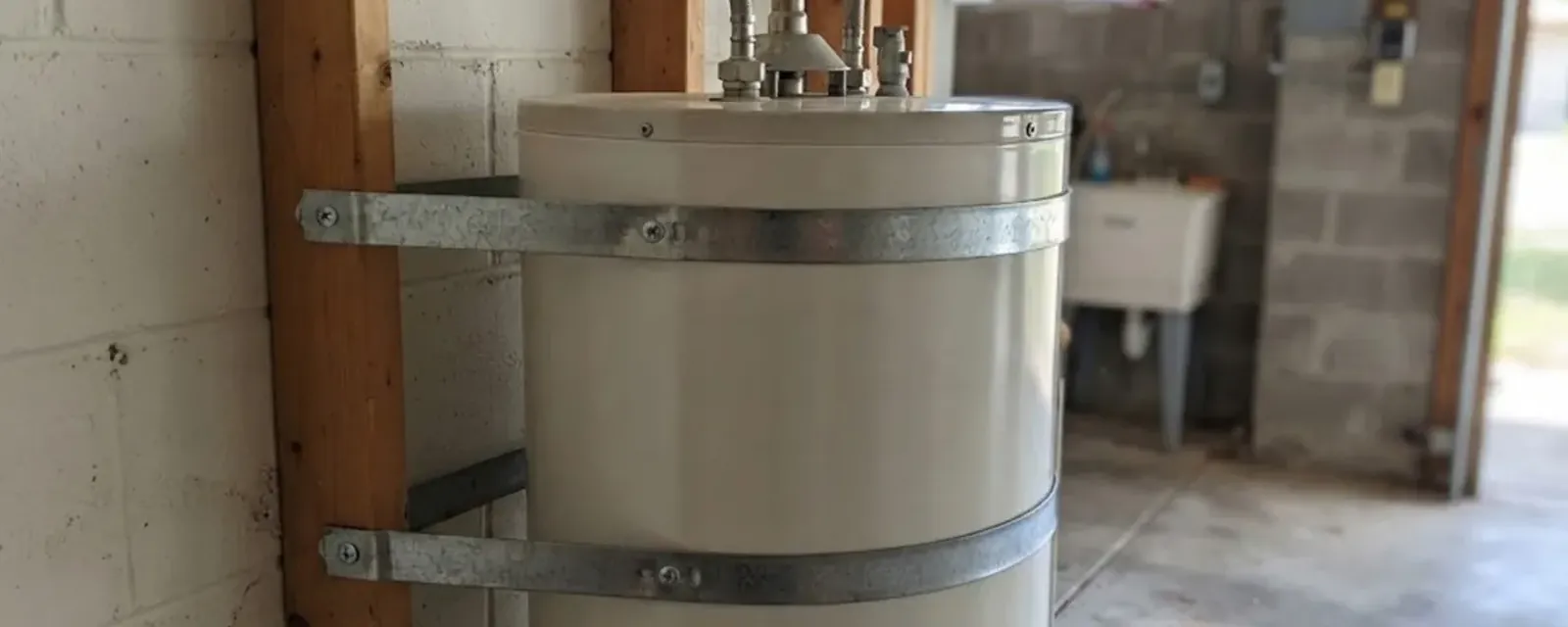
How a hybrid heater works
A hybrid unit has a small heat pump on top of a storage tank. The heat pump pulls warmth from the air in the room and moves it into the water. It also has regular heating elements as a backup for peak demand.
Because it moves heat instead of creating it, the unit is much more efficient than a resistance electric tank. The trade-off is that it cools the space around it and makes some noise. A utility room or basement works. A closet with no airflow does not.
Does a hybrid fit your home?
| Question | Good sign | Warning sign |
|---|---|---|
| Space around the unit. | A room with open air and some clearance. | A tiny closet with a sealed door. |
| Room temperature. | Basement or garage that stays above freezing. | Unheated space that goes very cold. |
| Drain nearby. | Floor drain or a place to run a condensate line. | No drain within reach. |
| Electric panel. | A free double breaker of the right size. | Panel at capacity. |
| Current fuel. | Electric tank, or gas you plan to retire. | Gas with a good flue you want to keep. |
Space and noise in older Greenbelt homes
Greenbelt Homes, Inc. describes its older houses as block, brick and frame buildings, many with small utility spaces. A hybrid unit is taller than a standard tank and needs air to work, so measure the room and the doorway before you order.
Noise is similar to a small dehumidifier. If the heater sits near a bedroom wall, ask about a quieter mode. If the room is already humid, the heater will also pull moisture out of the air, which is a small bonus in a basement.
Want to check your space?
Call (301) 936-0389. We will review the room and the panel before you buy a unit.
The condensate drain and the electrical needs
A heat pump makes condensate, like an air conditioner. It needs a drain line or a small pump to carry the water away. In a basement with a floor drain this is easy. In a closet upstairs it takes planning.
Hybrid units also need a dedicated circuit and a breaker sized for the heater. Some homes need a panel upgrade. We check this on the first visit because it can change the total price more than the unit does.
Questions to answer before you choose a hybrid
- Where will the unit sit and how much clear space does it have?
- Is there a drain or a place to run a condensate line?
- Does the panel have capacity for another 240 volt circuit?
- Does the room stay above freezing in winter?
- Does the building or cooperative allow the change?
Operating modes and what they do
Most hybrid heaters offer several modes. Heat pump only is the most efficient and the slowest to recover. Hybrid or auto mode uses the heat pump first and the elements when demand is high. Electric only uses the elements like a standard tank and is useful for a quick recovery after a houseful of guests.
Vacation mode lowers the temperature while you are away. Many units also have a high-demand setting. Setting the mode is easy, but the best choice depends on your household's pattern, so ask us to set it up for you.
Maintenance a hybrid needs
A hybrid has a small air filter and a condensate line that both need attention. Clean the filter every few months, check the condensate line for clogs and flush the tank once a year. The anode rod protects the tank from corrosion and should be inspected every few years.
A hybrid heater is also a better place to keep a leak alarm. Put a water sensor near the base so a leak or a blocked condensate line alerts you right away.
Comparing running cost without made-up numbers
The best way to compare is with your own utility rates. The unit's label lists an estimated yearly energy use for a typical home. Multiply that by your electric rate, and compare it with the same figure for a standard electric tank and for gas. We can help you read the label.
A hybrid usually costs more up front. Whether it pays back depends on your usage, your rates and whether you can reach the unit's best-case efficiency. If your household uses little hot water, the payback is slow.
Common questions about reliability
Hybrid heaters have more parts than a standard tank, including a compressor, a fan and sensors. Most run for years without trouble. The usual failures are a clogged condensate line, a dirty air filter and a sensor fault, and all are routine repairs.
Choose a model with a solid warranty and an installer who services it. Ask whether replacement parts are stocked in the area. A good warranty on the compressor and the tank is a sign the maker stands behind the design.
Pairing a hybrid heater with other upgrades
A hybrid heater works best when the house is already efficient. Insulate hot water pipes in unheated spaces, fix leaks and use a low-flow showerhead. If you plan to add solar panels, a hybrid heater can use your own power during the day.
Ask your electrician whether the panel can take the load without an upgrade. Combining the heater swap with other electrical work can save a second visit.
Rules and permits that apply in Greenbelt
WSSC Water says most plumbing in Prince George's County must be done by a WSSC Water-licensed plumber and names water heater replacements among the examples. Permits are applied for through WSSC's ePermitting system. For electrical work, ask your electrician about county requirements.
The City of Greenbelt says projects needing a county building permit must also be permitted by the City. A water heater swap in place usually does not need a building permit, but moving a heater or altering walls may. Ask before work starts. Homes in Berwyn Heights and Hyattsville often have the same small utility spaces, so measure the room before you order.
Frequently asked questions
It lowers the temperature of the room air somewhat while it runs. In a basement that is often welcome in summer and a mild nuisance in winter.
Yes, if you have electrical capacity and space. You also lose the gas flue, which you can cap. Compare running costs and the upfront price first.
Small utility spaces in older houses can be the main limit. Measure first.
The heat pump slows down and the backup elements take over, so efficiency drops. Keep the space above freezing.
Yes. Besides the water connections, it needs a condensate drain, space for airflow and often a bigger breaker.