Typical timelines
| House | Access | Likely time |
|---|---|---|
| Small ranch or townhouse. | Open attic or crawl space. | About 2 to 4 days. |
| Mid-size two-story. | Mixed access. | About 4 to 8 days. |
| Large house or finished basement. | Walls need opening. | About 1 to 2 weeks. |
| Add a service line replacement. | Trenching required. | Add a day or more. |
What happens day by day
Day one: setup and rough-in.
We protect floors, set the manifold and begin running lines.
Middle days: run the lines.
New lines go through attics, closets and chases, and fixtures are tied in.
Pressure test.
We pressure test before any wall is closed.
Inspection.
The WSSC inspection is booked with the permit, then walls and floors are patched.
What slows a repipe down
Finished walls, plaster instead of drywall, limited access to the second floor and hidden surprises in old plumbing all add days. Inspection scheduling matters too, because the inspector must see the work before it is covered.
Plan for plaster. Old plaster cracks when opened, and patching it takes longer than drywall. If your home has plaster, ask whether the quote includes patching or only the pipe.
Ready for a schedule?
Call (301) 936-0389 for an assessment and a written timeline.
Living in the house during a repipe
Most families stay. We plan to restore water at the end of each day when possible and we tell you in advance when it will be off. Keep children and pets away from the work zone, and move furniture away from walls we will open.
Expect dust and noise. We cover floors, but opening a wall creates fine dust, so close doors and run a fan if you can.
Materials and how they change the schedule
PEX tubing is flexible and can be run through walls with fewer cuts, which usually makes a repipe faster. Copper is rigid and needs soldered or pressed joints, so it takes more time and more openings. Both are accepted materials, and the choice depends on budget, the house and your preference.
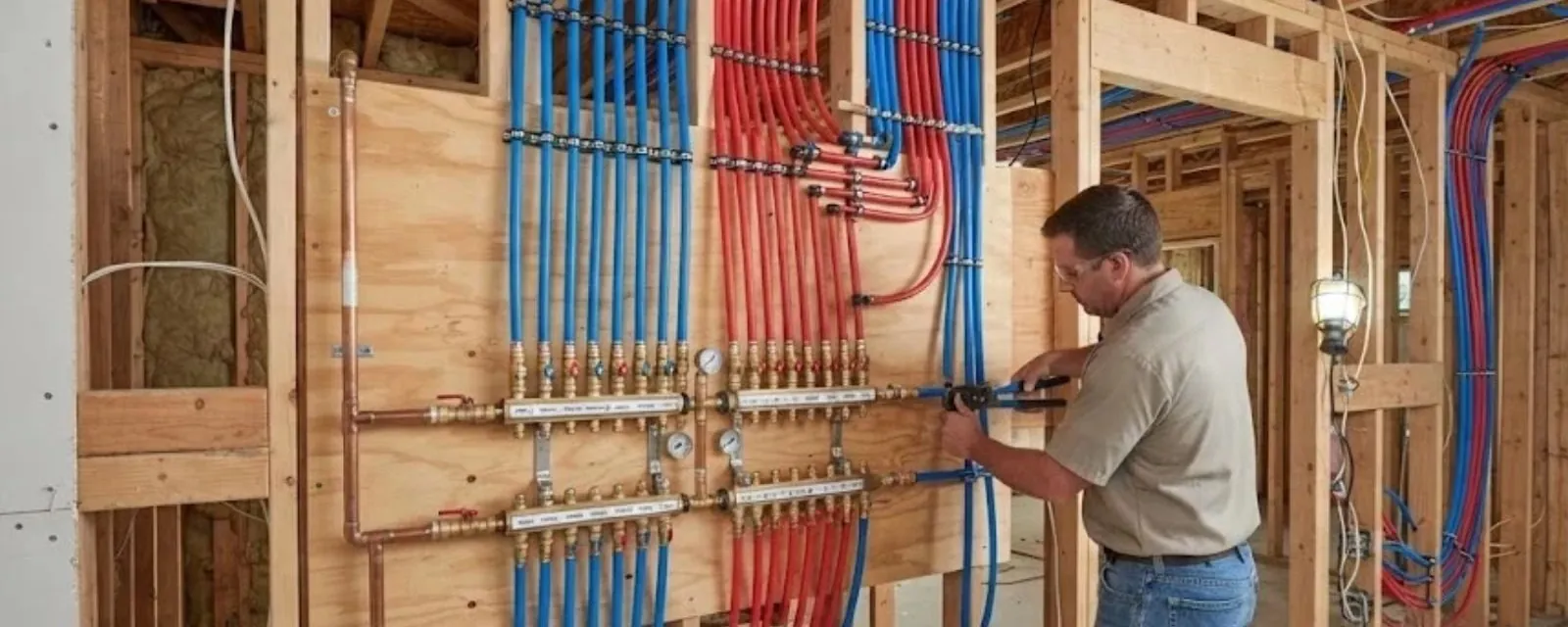
A manifold system runs a separate PEX line to each fixture from a central point, which makes future repairs and shutoffs simple. It uses more tubing but fewer joints, and many homeowners like being able to shut off a single bathroom.
How to prepare so the schedule holds
Clear access to the places we will work: the attic hatch, the basement or crawl space, closets and the walls near each fixture. Move furniture away from walls and take valuables off shelves in those rooms.
Tell us about any rooms with delicate finishes such as plaster, historic trim or tile that matters to you. We can plan openings to protect them. If you rent the home, get the owner's approval and coordinate the water shutoff with neighbors in shared buildings.
What a clear quote should say about time
A quote should state the expected number of working days, the days water will be off and when the inspection is booked. It should say who patches walls and when. If a quote is vague about time, ask for specifics. A repipe that drags on without a plan is a sign of a contractor juggling jobs.
Questions to ask a contractor about the schedule
Ask how many people will be on site each day, whether the same crew finishes the job and when the permit will be filed. Ask what happens if the inspector requires a correction and how the contractor handles surprises such as asbestos wrap on old pipe or hidden damage.
Ask for the plan for the water shutoff, including the longest stretch without water. If you work from home, tell the contractor so the loudest work is scheduled around your calls. Get the start date, the finish date and the patch date in writing.
After the repipe: what to check
Run every fixture and check pressure and temperature. Look at the new pipe at the water heater and the main for leaks over the first week. Flush the aerators to clear debris and run the hot water for a few minutes. Keep the permit, the warranty and the invoice with your house records.
Signs the repipe is worth it now
Several leaks in a year, discolored water every morning, falling pressure at the farthest fixtures and a plumbing system that dates from before the 1960s are the signs we see most. When you are already planning a remodel, doing the repipe before the walls are closed saves money.
If you are selling, a repipe can answer a buyer's inspection concern about old galvanized pipe. If you plan to stay, it removes a recurring source of damage and gives the family dependable water pressure.
What happens if the inspection finds a problem
An inspector may require a correction such as a support strap, a missing valve or a fitting that is not approved. We fix it and book the reinspection. That can add a day or two, so build a little slack into your plans.
Do not close walls or move back in fully until the inspection passes. It is much easier to fix a problem while the wall is open.
Pipe standards that shape a repipe
PEX tubing is made to ASTM F876, and copper tube to ASTM B88. Both are accepted by the plumbing code WSSC Water enforces, and the fittings must match the pipe's own standard. Drinking-water components should carry NSF/ANSI 61 marks.
A WSSC permit and inspection are part of the schedule, so ask your plumber how the inspection date fits the timeline. WSSC Permit Services can be reached at 301-206-4003.
The service line and local rules
WSSC Water says it is responsible for the part of the water service line that connects to the main and runs to the property line, and that the customer owns the part from the property line into the home. WSSC also notes that there are two types of customer-side galvanized pipes, one of which requires replacement and one that does not, and runs a What's Your Pipe Type program to help customers identify their service line material.
WSSC says most plumbing in Prince George's County must be done by a WSSC Water-licensed plumber and that permits are applied for through its ePermitting system. The City of Greenbelt says projects requiring a county building permit must also be permitted by the City, which matters if the work involves opening walls beyond plumbing.
In cooperative housing such as Greenbelt Homes, Inc., ask about approvals and shutoff coordination before scheduling. Repipes in Beltsville and Hyattsville often involve older galvanized lines, and the timeline depends on access to the walls.
Frequently asked questions
Not a whole house. A very small home with open access may be done in two days. Any repipe involves a pressure test and an inspection.
No. We plan to restore water at the end of each day whenever possible.
It depends on the scope. We state in the quote whether drywall patching and paint are included.
WSSC's What's Your Pipe Type program helps identify the material. We can also check when we assess the house.
Yes, in most cases. We schedule water outages and limit disruption.