Step one: work out where the water comes from
Water that appears at the wall a day or two after rain is usually surface water. Water that rises through the floor joint or a floor crack, especially after a long wet spell, is usually groundwater. Water that shows up when it has not rained at all points to plumbing, such as a leaking supply line or a failing water heater.
Keep a simple log. Write down the date, the rainfall and where the water appeared. After three or four events the pattern is clear, and it tells you which repair to buy first.
Step two: fix gutters, downspouts and grading
Prince George's County's Residential Drainage Manual says downspouts should have shoes at ground level that discharge onto a three-foot splash block, and that they can be extended with solid corrugated plastic pipe with no holes. It also says to keep gutters free of debris and to check them every spring and fall and after major storms.
It advises grading the ground so it slopes away from the house on all sides. In practice, a downspout that empties at the wall is the most common cause of a damp basement we see, and extending it costs a fraction of any drain system. Do this before you spend on anything else.
Which fix matches which symptom
| What you see | Likely source | First move |
|---|---|---|
| Water at the wall after rain. | Surface runoff. | Extend downspouts, clean gutters, regrade. |
| Seepage at the floor and wall joint. | Groundwater pressure. | Interior perimeter drain and sump pump. |
| Damp air and a musty smell, no puddles. | Humidity. | Dehumidifier, vapor barrier in a crawl space. |
| Water with no rain. | Plumbing leak. | Meter test, then leak detection. |
| Single crack leaking. | Foundation crack. | Crack injection after the water source is controlled. |
Crawl spaces are a moisture problem more than a flood problem
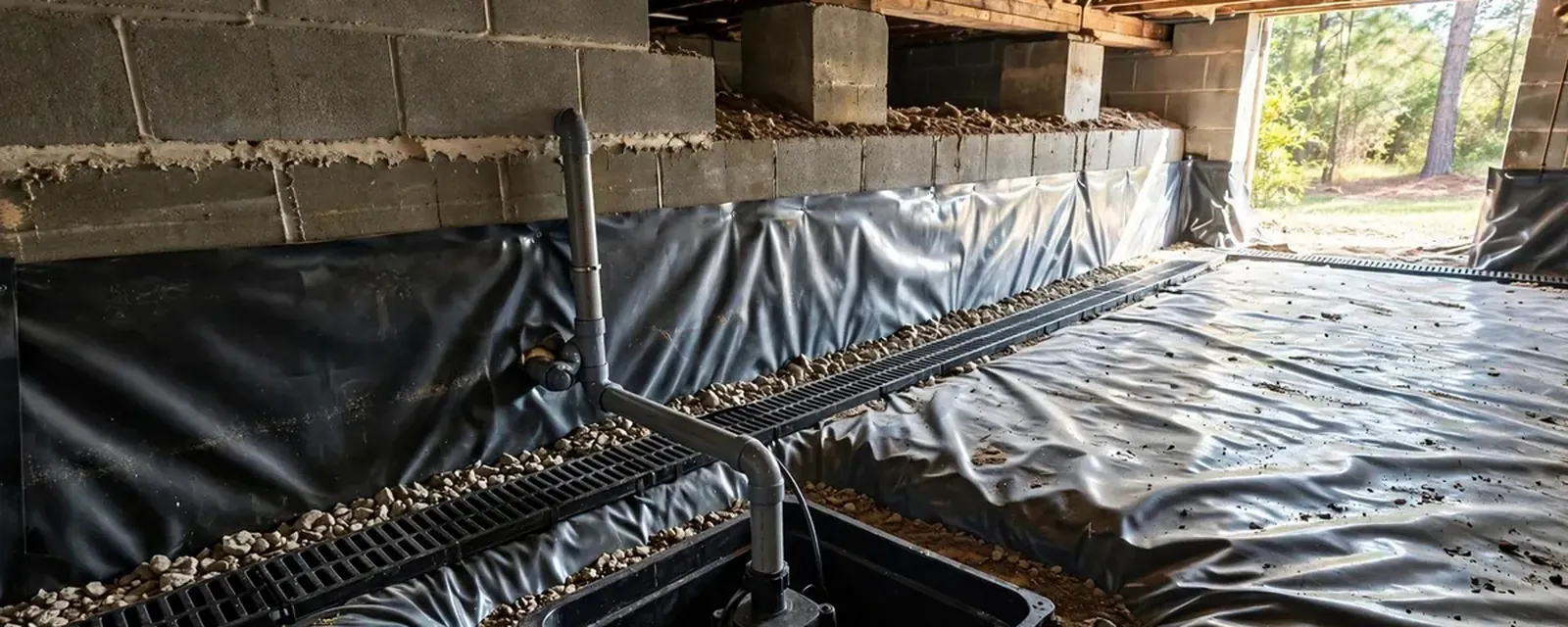
Many Greenbelt homes have a crawl space rather than a basement. The usual trouble there is not standing water but damp soil, high humidity and condensation on cold pipes. Over time that rots framing and feeds mold.
A ground vapor barrier, a working vent or a conditioned crawl space, and a small sump in the lowest corner handle most cases. Check insulation on supply pipes too, because wet insulation hides pinhole leaks.
If water is entering right now
Stay safe.
Keep out of standing water if outlets, the panel or appliances are below the waterline.
Protect belongings.
Lift items off the floor and move electronics up.
Control the water.
Use a wet vacuum or bucket, and check that a sump pump is running.
Call for help.
If the pump is dead or water keeps rising, call the 24/7 line.
Basement taking on water?
Call (301) 936-0389. We answer 24/7 and can send a plumber the same day when stock and schedule allow.
Interior drains and sump pumps: when they make sense
If the surface fixes do not stop the water, an interior perimeter drain collects it at the floor edge and sends it to a sump pit. A pump then moves it out. The system works with the groundwater instead of trying to stop it at the wall, which is why it suits older foundations.
The pump discharge matters. The Residential Drainage Manual says the outfall should be at least 8 to 10 feet from the foundation wall and, on private property, at least 10 feet from the property line. It also says not to discharge onto neighboring properties or sidewalks. Plan the outfall before you buy a pump.
What a waterproofing estimate should include
A good estimate names the water source it is solving, states the method and lists what is included. It should say whether it covers cutting and repairing the floor, the pump and its discharge, the backup and any permit. It should also describe the warranty in writing.
Be careful with any contractor who proposes a full system without looking at the gutters, the grading and the downspouts. Those are the cheapest fixes and they decide whether the expensive system is needed at all.
Humidity control after the water is handled
Once the water source is fixed, control moisture in the air. Run a dehumidifier set to about 45 to 50 percent, vent the dryer to the outdoors and fix any exhaust fans that do not reach outside. A basement that feels clammy in summer often needs a dehumidifier even when no water enters.
Keep stored items off the floor on plastic shelves, and avoid cardboard boxes against walls. If you see mold on a hard surface, clean it with detergent and water, and call a mold professional for anything larger than a small patch.
Local standards for crawl space and basement water
Prince George's County's Residential Drainage Manual is the guideline most relevant to a wet crawl space. It says to grade soil away from the foundation, to extend downspouts onto a splash block or solid pipe and to place a sump outfall 8 to 10 feet from the foundation.
Electrical work for a sump pump follows the National Electrical Code, known as the NEC, which calls for ground-fault protection near water. Contact DPIE before major drainage work, and call Miss Utility at 1-800-257-7777 before any digging.
What Greenbelt homeowners should know locally
Greenbelt Homes, Inc. reports that only a limited number of its homes have basements. It counts ten block homes with basements and twenty-five 1969 townhouses with basements among them. If you live in one of those, the interior drain and sump route is the one that applies. If your home is on a slab or a crawl space, the focus shifts to grading, gutters and the vapor barrier.
Before major drainage work, the Residential Drainage Manual says to contact the Prince George's County Department of Permitting, Inspections and Enforcement for permits, and to call Miss Utility at 1-800-257-7777 before any digging. For flooding and erosion problems on public ground, call 3-1-1. In a cooperative or condominium, also ask the association before changing exterior drainage.
The manual also notes that correcting seepage from a hill behind a home is generally the homeowner's responsibility, so document where the water comes from before you talk to a neighbor or the County. We also see the same drainage problems in Lanham and College Park, where older foundations and heavy rain meet.
Frequently asked questions
Not always. A damp smell without puddles is often humidity. A dehumidifier and better ventilation may be enough, but fix gutters and grading first, because they cause most of the dampness we see.
Often, yes. The County manual says to contact DPIE before remedial work, and the City of Greenbelt says projects that need a county building permit must also be permitted by the City. Ask before work starts.
Only if groundwater is the source and the pump can discharge well away from the house. Add a battery backup if storms cut your power.
If the soil is damp, you see condensation on pipes or framing smells musty, a vapor barrier helps. We check the space before recommending one.
Yes, with the cooperative's approval for anything that changes the exterior or drainage. Ask the cooperative first, then call us to plan the work.